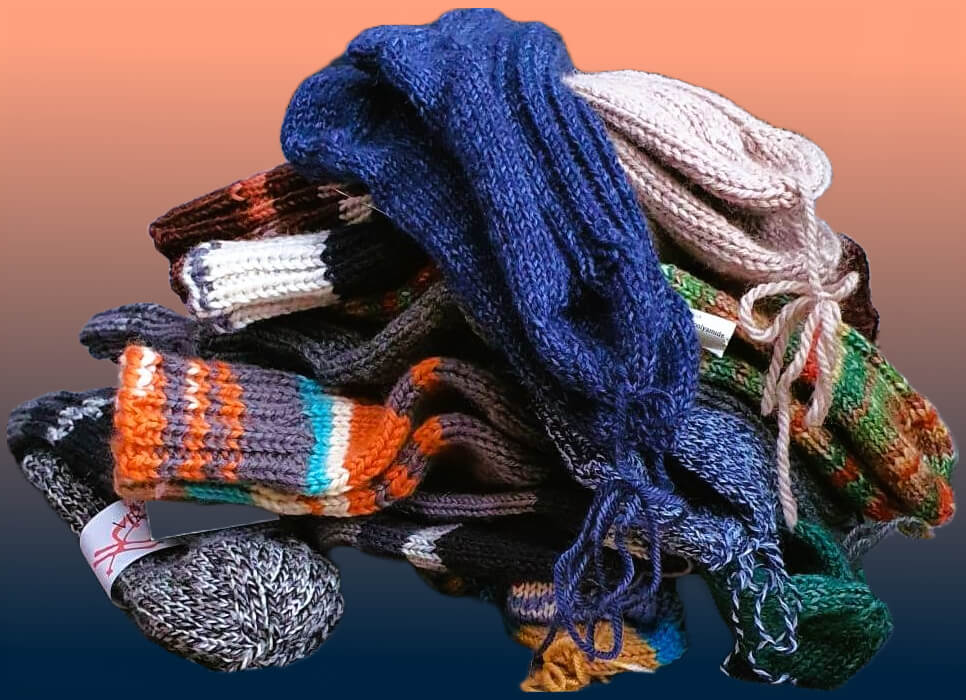
Hello, fellow knitters!
Welcome back to Werecat Industries! Today, we’re turning our attention to the cozy and versatile world of knitted socks. Whether you’re a seasoned sock knitter or just dipping your toes into this rewarding craft, we’ve got plenty of tips, inspiration, and encouragement to share. Let’s embark on this journey from mastering basic sock knitting techniques to creating your own custom designs.
The Basics: Getting Started with Sock Knitting
Tools and Materials
Before we dive into the knitting itself, let’s talk about the tools and materials you’ll need:
Five Double-Pointed Needles (DPNs): Traditional sock knitting uses five needles. You’ll have four needles forming a square to hold your stitches and one needle to knit with. This method might seem intimidating at first, but it offers great flexibility and control.
Yarn: Choose a sock yarn that’s soft, durable, and has a bit of elasticity. Wool blends are popular choices.
Stitch Markers: Useful for keeping track of pattern repeats or specific parts of the sock.
Tapestry Needle: For weaving in ends and seaming.
Basic Sock Construction
Cuff: Start with a stretchy cast-on and work in a ribbing pattern (e.g., K2, P2) for the desired length.
Leg: Continue in stockinette stitch or any pattern you like until you reach the ankle.
Heel Flap: Knit back and forth on half of the stitches to create the heel flap.
Turn Heel: Short rows are used to create a rounded heel that fits snugly.
Gusset: Pick up stitches along the sides of the heel flap and decrease to shape the gusset.
Foot: Knit in the round until the foot is the desired length.
Toe: Decrease stitches evenly to shape the toe, then graft the remaining stitches together using the Kitchener stitch.
Our Favorite Basic Sock Patterns
Vanilla Socks: A simple stockinette stitch sock that lets you focus on mastering the basic construction.
Ribbed Socks: Adding ribbing down the leg and foot provides extra stretch and a snug fit.
Patterned Socks: Once you’re comfortable with the basics, try a simple lace or cable pattern to add interest.
Progressing to Custom Designs
Exploring Advanced Techniques
As you become more confident with basic socks, you might want to explore advanced techniques and customizations:
Different Heels: Try out heel variations like the short-row heel, afterthought heel, or the Fish Lips Kiss heel.
Toe Shapes: Experiment with rounded, star, or wedge-shaped toes to find your perfect fit.
Patterned Socks: Incorporate lace, cables, or colorwork into your socks for added texture and visual interest.
Creating Your Own Designs
Designing your own socks is a rewarding way to express your creativity. Here are some steps to get you started:
Choose Your Yarn: Select a yarn that suits your desired sock weight and texture. Consider variegated yarns for a colorful effect or solid colors for intricate patterns.
Swatch: Knit a swatch to determine your gauge. This will help you calculate the number of stitches needed for your sock.
Plan Your Design: Sketch out your sock design, including any stitch patterns, color changes, or other details.
Calculate: Use your gauge swatch to calculate the number of stitches needed for the cuff, leg, heel, foot, and toe.
Write It Down: Keep detailed notes as you knit your sock. This will help you replicate the design for the second sock and share your pattern with others.
Inspiration from New Zealand
During a recent trip to New Zealand, I found myself knitting almost daily while exploring the beautiful landscapes and visiting family. There’s something incredibly soothing about knitting in the car, watching the scenery go by, and creating something warm and cozy. Here are a few tips for knitting on the go:
Travel-Friendly Projects: Socks are the perfect travel project – they’re small, portable, and easy to pick up and put down.
Organize Your Supplies: Keep your yarn, needles, and pattern in a small project bag for easy access.
Use a Simple Pattern: While traveling, stick to simple patterns that don’t require constant reference to a chart or instructions.
Final Thoughts
Knitting socks is a delightful journey from mastering the basics to creating unique, custom designs. It’s a craft that combines functionality with creativity, offering endless possibilities for personalization. Whether you’re knitting for yourself or creating gifts for loved ones, the process is both rewarding and enjoyable. We hope this post inspires you to pick up your needles and start knitting socks. Remember, the most important part is to enjoy the process and have fun with your creations.
Stay tuned to Werecat for more crafting inspiration, tutorials, and community spotlights.
Happy knitting!
Sarah and Emily